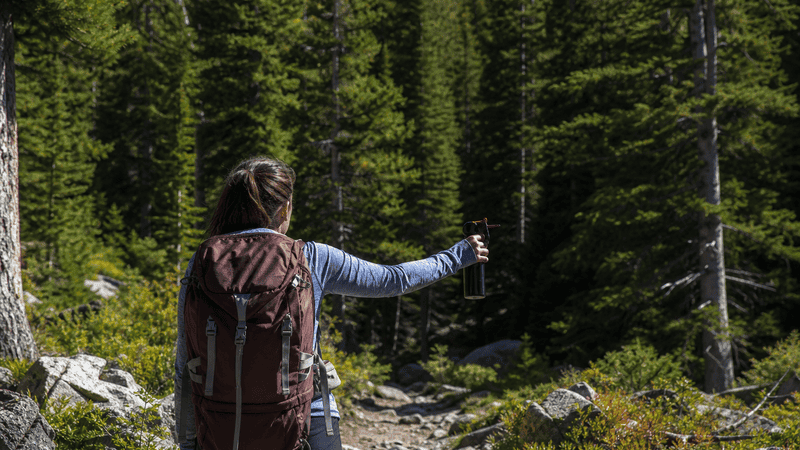
Yes, pepper spray works on bears — but only if you are using the right product at the right moment in the right way. Standard personal defense pepper spray is not the same as bear deterrent spray, and carrying the wrong one into bear country is a critical mistake that could cost you your life. Bear-specific formulas must meet minimum concentration and volume standards, be deployable at distance, and create a wide enough cloud to stop a charge. The details matter enormously here.
I have spent more than 30 years in the security industry, and I will tell you plainly: few questions I receive carry higher stakes than this one. When someone heading into the backcountry asks whether their regular pocket spray will stop a grizzly, my answer is always the same — stop, slow down, and let me walk you through what you actually need to know before you take another step into that wilderness. This post covers the critical distinctions, the non-negotiable specifications, and the step-by-step preparation that could mean the difference between a close call and a tragedy.
What is the difference between bear pepper spray and regular pepper spray?
This is the most important distinction I can make for you, and I want you to read it carefully. Regular personal defense pepper spray — the kind designed to stop a human attacker — is formulated for short range, typically 10 to 15 feet, in a focused stream or gel pattern. Bear deterrent spray is an entirely different product category. It must deliver a wide cone-shaped cloud at distances of 25 to 35 feet, with enough volume to saturate the air between you and a charging animal.
The EPA and the U.S. Forest Service have established specific minimum standards for bear deterrent sprays. These products must contain between 7.9% and 9.2% capsaicin and related capsaicinoids — the active ingredient in hot pepper that causes intense irritation to eyes, nose, and respiratory tract. Standard personal defense sprays often contain 1% to 2% major capsaicinoids. That difference is not minor. It is the gap between something that might annoy a bear and something that will stop it.
Canister size matters just as much as concentration. Bear spray canisters must contain a minimum of 7.9 ounces of formula and must deliver a continuous spray of at least 6 seconds. You need that volume to create a barrier cloud large enough to intercept a bear moving at 35 miles per hour. A small keychain canister simply cannot do that job, no matter what its label says.
If you are heading into backcountry and want to see what serious defensive spray options look like before we get into bear-specific details, our maximum strength pepper spray gives you a clear picture of what high-concentration formulas are capable of — though for bear country, you will still want a dedicated bear deterrent product at the volume and range discussed here.
How effective is bear pepper spray against both black bears and grizzlies?
The research on this question is remarkably consistent. A landmark study published in the Journal of Wildlife Management analyzed 83 incidents involving bear pepper spray over a 20-year period. The results showed that bear spray was 92% effective in deterring brown bear attacks and 90% effective against black bears when used correctly. Those are numbers that demand your attention.
Equally striking — and this is something I want you to hold onto — is how bear spray compares to firearms in stopping bear attacks. The same research found that firearms were effective in stopping bear attacks in only 67% of cases. This is not an argument against responsible firearm use, but it is a clear signal that bear pepper spray, used correctly, is one of the most reliable defenses available to anyone in bear country.
The critical phrase in that statistic is “used correctly.” Spray that stays holstered, spray deployed too late, or spray aimed improperly does not earn those favorable numbers. The effectiveness data assumes proper positioning, correct timing, and appropriate canister volume — which is why preparation and practice matter before you ever reach a trailhead.
Grizzlies, which are generally more aggressive in defensive encounters than black bears, are the primary target species in most bear spray research. The fact that spray performs so well against grizzlies tells you the chemistry and delivery mechanism are genuinely powerful when the right product is used. Black bear encounters are generally more avoidable through noise and deterrence, but the same spray that stops a grizzly will stop a black bear — and you should always carry it regardless of which species inhabits your destination.
When should you deploy bear spray during an encounter?
Timing is everything, and deploying too early is nearly as dangerous as deploying too late. Here is the sequence I walk everyone through before they head into bear territory:
At 60 feet or more: Do not spray. Make yourself known. Speak in a calm, low voice. Avoid direct eye contact. Back away slowly if you can do so without turning your back on the bear. Most encounters at this distance end without further escalation if you do not run or act erratically.
At 30 to 60 feet: Remove the safety clip from your canister. Hold it in your dominant hand with the nozzle pointed toward the bear. Watch the bear’s behavior carefully. If it shows signs of aggression — popping jaws, swaying head, laying ears flat, charging in bursts — prepare to deploy.
At 25 to 30 feet during a charge: Deploy now. Aim slightly downward to create a cloud the bear must run through. Hold for a 1 to 2 second burst, then reassess. Most charges are stopped or deflected at this range. If the bear continues, deploy again until the canister is empty or the bear retreats.
Critical warning: Never spray preemptively on your tent, clothing, or gear. Unlike insect repellent, capsaicin on surfaces can actually attract bears. Only deploy bear spray directly into the path of an oncoming animal.
What does bear spray not protect you from in the backcountry?
Bear spray is a last-resort defense tool — not a complete safety system. I want to be precise about this because overconfidence in any single tool creates blind spots that get people hurt. Here is what bear spray alone will not protect you from:
Surprise encounters at close range. If a bear emerges from dense brush at 10 feet, you may not have time to draw and deploy effectively. This is why making noise on the trail — using a bear bell, clapping, or calling out — is essential prevention, not optional courtesy.
Night encounters in camp. A sleeping hiker is not a hiker who can deploy spray in time. Proper food storage, campsite selection at least 200 feet from cooking and food areas, and camp hygiene are your primary defenses at night.
Wind and rain conditions. Bear spray in a strong headwind can blow back onto you, which is every bit as disabling as it sounds. Rain can reduce effective range. Always check wind direction before deploying, and position yourself upwind whenever possible.
Multiple threats or predatory behavior. A small number of bear attacks — particularly from black bears — are predatory rather than defensive. A predatory bear that has targeted you as prey may require a more sustained defense. This is rare but real, and it underscores why wilderness safety requires layered preparation, not a single tool.
How should you carry bear spray so it is actually accessible during an encounter?
The most reliable canister in the world does nothing for you inside your pack. This is one of the most consistent mistakes I see in outdoor safety preparation — people who have the right product but carry it in completely the wrong place. Bear encounters unfold in seconds. You need your spray accessible in one motion.
The correct carry position is a holster on your hip or chest — somewhere you can draw with one hand without looking. Most dedicated bear spray canisters come with a belt holster for exactly this purpose. Practice the draw until it is automatic. Do it with gloves on if you hike in cooler conditions.
If you are a trail runner or fast hiker, carry positioning becomes even more critical. You are moving faster, making less noise, and less able to catch a stationary scent trail before a bear does. Our pepper spray for joggers explores fast-access carry solutions designed for exactly this type of movement — and if you are running trails in areas with bear activity, those fast-access principles apply directly to how you position your bear spray as well.
Check your canister before every trip. Verify the safety clip is intact but removable with one finger. Check the pressure gauge if your canister has one. A canister older than four years should be replaced — the propellant degrades over time and your effective range decreases with it.
Are there any situations where pepper spray alone is not enough for outdoor safety?
Yes, and I believe in being direct with you about this. Bear spray is your most effective tool for a bear encounter, but a complete backcountry safety plan involves more than one layer of defense. Noise deterrence prevents most encounters. Proper food storage prevents habituated bears from approaching camp. Group hiking significantly reduces encounter risk. And personal awareness — staying off trails at dawn and dusk in high bear-activity areas — reduces your exposure before any tool is ever needed.
For those who spend significant time outdoors, a triple action pepper spray may serve well for the human safety side of outdoor activities — trail encounters, parking areas, remote work sites — as a complement to dedicated bear deterrent for wildlife situations. Your overall safety toolkit should address every realistic threat in your environment, not just the most dramatic one.
I also want to acknowledge that many of my customers who ask about bear spray are people who work or exercise in semi-rural and suburban areas — joggers who cross greenways bordering wildlife habitat, delivery drivers working rural routes, and outdoor workers who move through areas where wildlife encounters are possible. If that describes your situation, you may find our related reading on pepper spray versus stun guns for runners useful as you think about your full defensive toolkit for time outdoors.
Frequently Asked Questions About Bear Pepper Spray
Can I use regular pepper spray on a bear in an emergency?
Standard personal defense pepper spray is not recommended as a bear deterrent. It lacks the volume, range, and concentration needed to stop a charging bear. Effective bear spray must contain 7.9% to 9.2% capsaicin and related capsaicinoids and deliver at least 7.9 ounces of formula at a range of 25 to 35 feet. In an absolute emergency, a high-concentration personal spray is better than nothing — but it is not a reliable substitute and should never replace a proper bear deterrent canister.
Does bear pepper spray expire?
Yes. Most bear spray canisters have a manufacturer-recommended shelf life of three to four years. After that, the propellant that drives the spray degrades, reducing effective range and delivery volume. Check the expiration date printed on your canister before every season. An expired canister may still spray but will not perform to the specifications that make it effective in a real encounter. Replace expired canisters before entering bear country.
Will pepper spray stop a bear if it charges from behind?
Deploying bear spray on a bear approaching from directly behind is extremely difficult. This is exactly why trail awareness, noise-making, and traveling in groups are essential prevention strategies. If a bear is charging from behind, your best option is to create distance, get to a position where you can deploy spray toward the bear’s face and nose, and deploy as soon as the animal enters the 25-to-30-foot effective range. Prevention removes this scenario far more reliably than any reactive strategy.
Is bear spray legal to carry everywhere?
Bear spray is legal in all 50 states for use as an animal deterrent. However, some national parks, wilderness areas, and trail systems have specific rules about where it can be carried or stored. Canada has its own regulations regarding crossing the border with bear spray. Always verify the rules for your specific destination before your trip. Note that bear spray is generally classified separately from personal defense pepper spray in most jurisdictions, so regulations governing one may not apply to the other.
How far away should I be before deploying bear spray?
Deploy bear spray when a charging bear reaches approximately 25 to 30 feet from your position. This gives the spray time to create a dense cloud between you and the animal. Deploying too early wastes your canister and may miss the bear entirely. Deploying too late gives the spray insufficient time to take effect before contact. Practice visualizing that distance on a trail so you can judge it instinctively under stress — 25 feet is roughly the length of a standard school bus.
Should I spray bear spray around my campsite to deter bears?
Absolutely not — and this warning cannot be overstated. Capsaicin residue on surfaces does not repel bears. Research has shown it can actually attract curious bears to investigate the scent. Never spray bear deterrent on your tent, gear, clothing, or around your campsite. Use it only as a direct deterrent aimed at an oncoming animal. For campsite bear deterrence, rely on food storage protocols, scent-free hygiene products, and proper campsite setup away from cooking areas.
What should I do after using bear spray in an encounter?
After deploying bear spray, back away from the area slowly and get to a safe location — your vehicle, a building, or open ground with good visibility. Report the encounter to local park rangers or wildlife authorities as soon as possible. Even a deterred bear may return to the area, and rangers need that information to protect other hikers. If you made skin contact with the spray yourself, flush with large amounts of water — avoid touching your eyes. Do not re-enter the area until authorities have assessed the situation.
Can children or elderly hikers carry and use bear spray effectively?
Bear spray canisters are larger and heavier than personal defense sprays, which can make them more physically demanding to handle for children or individuals with limited grip strength. Children should never be the primary carrier of bear spray in a group — an adult should carry and control the canister. For elderly hikers or those with hand or wrist limitations, practicing the draw and deployment motion before the trip is essential to confirm they can manage the canister reliably. A holster that reduces grip requirements can help.
Bear pepper spray is one of the most well-researched and consistently effective wildlife deterrents available — but only when it is the right product, carried in the right position, deployed at the right moment. Every detail in this post exists for a reason. The concentration requirements, the canister volume, the carry position, the deployment distance — these are not technicalities. They are the difference between the spray working and the spray failing when your life depends on it. I want you to walk into any outdoor environment fully prepared, not relying on a product that is not up to the task or a plan that has gaps you have not thought through.
Take the time to review your full outdoor safety kit before your next trip. If you have questions about what products are right for your specific situation — whether you are a weekend hiker, a trail runner, or someone who works in areas where wildlife encounters are a real possibility — I am here to help you find the right answer. Browse our full selection of high-strength pepper spray options and do not hesitate to reach out. Be Prepared and Be Safe!