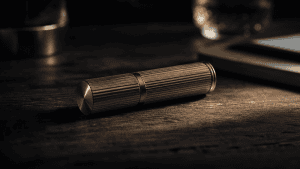
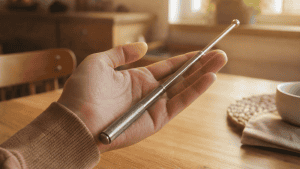
A keychain personal alarm is a small, hand-carried device that emits an alarm sound between 100 and 130 decibels when activated — loud enough to rival a jet engine at close range and disrupt an attacker’s advantage instantly. It requires no license, no training, and no hesitation. For anyone who wants command over their personal space without carrying a weapon, this is one of the most effective tools available.
Why does a device this small carry this much authority?
Do not let the size fool you. A keychain personal alarm is built on one simple, undeniable principle: sound is power. At 120 to 130 decibels, you are producing a noise level close to a chainsaw or a thunderclap — directed at close range, in a moment someone did not expect resistance. That is not a deterrent that asks politely to be left alone. That is a device that takes control of the situation the instant your thumb hits the trigger.
I have spent more than 30 years in the security industry, and if there is one lesson that has never changed, it is this: control the moment, and you control the outcome. A personal alarm does not rely on someone else showing up in time. It does not rely on strength, size, or speed. It relies on physics — sudden, overwhelming sound that forces attention, disorients an aggressor, and buys you the seconds you need to act. That is authority you carry in your pocket.
How loud does a personal alarm actually need to be to work?
You want a minimum of 100 decibels, and I recommend 120 to 130 for real-world command of a situation. Anything less starts to blend into ambient city noise, traffic, or a crowded parking structure. At 130 decibels, there is no blending in — there is only immediate, unmistakable disruption.
This is not a number I throw out casually. Decibels increase on a logarithmic scale, which means a jump from 100 to 130 decibels is not a modest improvement — it is a dramatic leap in intensity and reach. A 130dB personal alarm is loud enough to be heard from over 300 feet away, cutting through walls, engine noise, and crowd chatter alike. When you activate that kind of sound at arm’s length from someone, you are not asking for help quietly. You are commanding attention immediately, from every direction at once.
What makes a keychain alarm better than carrying pepper spray or a stun device?
A personal alarm demands nothing from you but a single motion, and it works in every situation without exception. Pepper spray requires distance, wind awareness, and direct aim. A stun device requires contact. A personal alarm requires only that you pull a pin, press a button, or squeeze — and the response is instant, total, and impossible to ignore.
I am not here to tell you to abandon other tools. I carry more than one form of protection myself, and I recommend a layered approach to every customer who walks through my door. But if you want the single most reliable, zero-training-required, works-every-time tool in your arsenal, the keychain alarm earns that spot. It does not run out of spray. It does not need to make contact. It simply performs, every single time, the moment you demand it to.
Where should I attach a personal alarm so I can actually use it in time?
Attach it where your hand goes without thinking — your keychain, your bag zipper, or your belt loop. The entire advantage of this device disappears if it is buried at the bottom of a purse. Command over a dangerous moment starts long before that moment ever happens; it starts with where you position your tools today.
I always tell my customers: preparation is not paranoia, it is power reserved in advance. A lightweight self-defense keychain clipped where your keys already live means your alarm is active before your brain has even finished processing the threat. For those who want something even more discreet and durable, an aluminum self-defense keychain offers a rugged build that stands up to daily wear without adding real weight to your ring.
Can a personal alarm double as more than just noise?
Yes, and this is where modern design gives you far more command than the alarms of even a decade ago. Today’s devices integrate features like LED strobe lights, GPS location sharing, and wearable formats that put protection literally on your wrist. This is not a gimmick — it is a force multiplier.
A personal alarm with GPS does not just make noise; it tells someone exactly where you are while it does it. That is the difference between disrupting a moment and controlling the aftermath. And for those who want an alarm that lives on their body rather than in a pocket, a personal alarm watch puts total authority over your safety right at your wrist, ready before you even think to reach for it.
Which brands actually deliver on the promise of serious noise?
Not every alarm on the market performs at the level it claims, and this is exactly where experience matters. I have tested and sold devices from brands like Mace, Streetwise, SMART, MultiGuard, and Wildfire — and I stand behind every one I carry because I know what happens when you pull that pin under pressure. A device that hesitates, sounds weak, or fails to reach full volume is not a safety tool. It is a false promise.
This is why I do not sell generic, unproven alarms. Every device in my lineup has been chosen because it delivers the decibel rating it advertises, holds up under real use, and activates without fail the first time and every time after. When your safety is on the line, “close enough” is not a standard I am willing to accept, and it should not be one you accept either.
How do I choose the right personal alarm for my situation?
Start with decibel rating, then move to activation method, then think about where and how you will carry it. These three decisions determine whether your alarm becomes second nature or ends up forgotten in a drawer.
- Decibel rating: Choose 120dB minimum; 130dB for maximum command of the situation.
- Activation method: Pull-pin, button-press, or squeeze — pick what your hands will do fastest under stress.
- Carry location: Keychain, wristwear, or bag clip — wherever your hand already goes without thinking.
- Extra features: GPS tracking or strobe lighting for added control over the outcome, not just the moment.
- Build quality: Metal or reinforced housing outlasts flimsy plastic that can crack under real-world use.
I walk customers through this exact decision every day, whether they are a college student walking back from a night class or a grandparent who wants something simple clipped to their cane. There is no one-size-fits-all answer, but there is always a right answer for you — and I am here to help you find it.
Frequently Asked Questions About Keychain Personal Alarms
How loud is a keychain personal alarm compared to everyday sounds?
A 130-decibel personal alarm is louder than a jackhammer, a rock concert, or a jet engine heard from 100 feet away. That level of sound is physically uncomfortable at close range and impossible to mistake for background noise, which is exactly why it commands immediate attention in a crisis.
Do I need a permit to carry a personal alarm?
No permit is required to carry a personal alarm in the United States. Because it emits sound only and involves no chemical or electrical discharge, it is legal to carry virtually anywhere, including schools, airports, and workplaces where other self-defense tools may be restricted.
Will a personal alarm actually scare off an attacker?
Sudden, extreme noise triggers an instinctive startle response in nearly everyone, including someone attempting to attack you. That split-second disruption often breaks their focus and confidence, giving you the opening to create distance, draw attention from bystanders, or escape the situation entirely.
How long does the battery last on a keychain alarm?
Most personal alarms use replaceable batteries that last one to three years under normal standby conditions, since the device draws power only when activated. I recommend testing your alarm every few months and replacing the battery annually as a simple habit of staying prepared.
Can children or elderly family members use a personal alarm easily?
Yes, pull-pin and button-activated alarms are specifically designed for ease of use across every age group. I regularly recommend them for elderly parents living alone and for kids walking to school, because there is no strength, aim, or training required — just one simple motion.
What is the difference between a personal alarm and a whistle?
A whistle depends entirely on your lung capacity and can be silenced if someone covers your mouth. A personal alarm operates independently of your breath or physical ability, producing a consistent, maximum-volume sound the instant it is triggered, regardless of your physical state in that moment.
Should I carry more than one personal safety device?
I recommend a layered approach whenever practical. A personal alarm paired with a device like a self-defense keychain gives you both an audible deterrent and a physical option, covering more scenarios than relying on a single tool alone.
Take Command of Your Personal Safety Today
You do not need size, strength, or years of training to control a dangerous moment. You need a tool that performs without hesitation the instant you demand it to — and a 130-decibel keychain alarm delivers exactly that kind of command, every single time. I have spent my career making sure the devices I put in your hands actually do what they promise, because your safety is not a place for guesswork.
If you are ready to put real authority in your pocket, explore our full lineup of personal alarm keychains and see which one fits how you already move through your day. And if you want to understand exactly how these devices work before you buy, I encourage you to read Personal Alarms Explained: How They Work and Why They’re Worth Carrying.
Don’t wait until it’s too late. Equip yourself and your Loved Ones with reliable, Self Defense Tools and take control of your personal safety. All the products listed make great, low-cost gifts. Keeping you and your loved ones safe.
Free shipping on orders over $25.
Be Prepared and Be Safe!