The self defense setup women should actually carry while walking alone at night isn’t one product — it’s a layered system: a fast-access alarm or deterrent for the approach, a hands-free carry tool like a keychain-mounted device for the moment someone gets close, and a backup option for worst-case contact. Most women only carry one piece of this puzzle. The ones who feel truly prepared carry all three — and know exactly when to use each one.
There’s something most personal safety guides won’t tell you directly. They’ll list products. They’ll rank pepper sprays. They’ll tell you to “stay aware of your surroundings.” But almost none of them will explain the actual sequence of what happens on a dark sidewalk — the specific seconds where a situation either de-escalates or doesn’t, and what needs to already be in your hand before that moment arrives.
I’ve spent over thirty years in the security industry, and if there’s one thing I’ve learned, it’s that the setup matters more than any single item. A single tool tucked in the bottom of a purse is almost worse than nothing — because it creates a false sense of coverage. Let me walk you through what a real setup looks like, and why the order of operations is the part nobody talks about.
What is the best self defense setup for walking alone at night?
The best setup follows a three-layer sequence: awareness and deterrence, close-range access, and contact-level backup. Each layer answers a different question — “Is someone approaching me?”, “Someone is now within arm’s reach, what do I do?”, and “Contact has happened, now what?” Most personal safety advice online skips straight to product number two and calls it a day. That’s the gap.
Layer one is about noise and attention. A loud personal alarm clipped where you can reach it in under two seconds does something most people underestimate — it changes the entire calculation for anyone with bad intentions. They came looking for someone quiet and unnoticed. A 130-decibel alarm removes that option instantly.
Layer two is what most women think of first, and for good reason — it’s the tool you’re actually holding when someone is close enough to reach you. This is where self defense keychains for women earn their place in the setup. They live on your keyring, which means they’re already in your hand the moment you’re walking to your car — no digging through a bag required.
Layer three is the piece almost nobody talks about publicly, and there’s a reason for that. It’s the backup option — something with enough force behind it to end a physical confrontation if it comes to that. This is not a layer to overthink or dramatize. It’s simply there, quietly, for the scenario you hope never happens.
Why isn’t pepper spray enough by itself?
Pepper spray isn’t enough by itself because it depends entirely on conditions most people don’t control in the moment — wind direction, distance, and whether you can access it fast enough before someone is already too close. It’s an excellent layer-two tool. It is not a complete setup on its own, and treating it like one is where most safety plans quietly fail.
Here’s what almost never gets mentioned: pepper spray works best at a specific range, typically six to twelve feet. If someone has already closed that gap — which happens faster than most people expect — you’ve lost your ideal window. That’s not a flaw in the product. It’s a flaw in relying on one tool to do a job that actually requires layers.
We go deep into fast-access spray options in our post on the best pepper spray for women walking alone at night, and one theme comes up again and again — access speed matters more than potency. A spray in your glovebox is a spray that doesn’t exist during the ten seconds it actually matters.
What’s the difference between a keychain device and a stun gun?
A keychain device is built for constant carry and instant access — it’s on your keys, always with you, no separate bag or holster required. A stun gun is typically a standalone unit offering higher deterrent force, usually carried separately and drawn with intention. The difference isn’t about which is “better.” It’s about which moment each one is designed to solve.
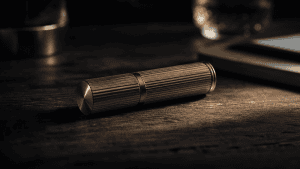
This is where the setup starts to feel less like a checklist and more like a strategy. A lightweight self defense keychain stays with you without you ever thinking about it — it’s already accounted for the second you grab your keys to leave the house. That’s not a small detail. It’s the entire reason it works.
An aluminum self defense keychain takes that same always-with-you principle and adds durability that holds up to years of use — keys jingling against it, dropped on concrete, tossed in a bag. There’s a quiet confidence in knowing your setup doesn’t degrade the moment life gets a little rough with it.
If you also walk a dog at night — which changes your setup more than people realize, since one hand is often occupied — there’s a specific consideration worth exploring in our guide to the stun gun for walking dog at night. The leash changes everything about what “fast access” actually means for you.
What should women carry for close-contact self defense?
For close-contact situations, a compact impact tool offers a layer most setups are missing entirely — something with reach and leverage if a situation goes physical despite every earlier deterrent failing. This isn’t the tool you reach for first. It’s the one that exists quietly in the setup, just in case.
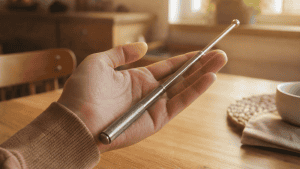
A steel baton for self defense extends your reach well beyond arm’s length, which matters more than most people initially assume. Distance is safety. A tool that adds even a foot or two of separation between you and a threat changes the entire physics of a confrontation.
What’s interesting is how rarely this layer gets discussed compared to sprays and alarms — almost like it’s the part of the setup people assume is only for security professionals. It isn’t. It’s simply the piece most personal safety content leaves out of the conversation entirely, which is exactly why so few women know it exists as an option.
How fast do I actually need to be able to access my self defense tool?
You need access in under three seconds — the time it typically takes for someone to close the distance from twenty feet to arm’s reach. Anything buried in a purse, a jacket pocket you have to unzip, or a phone case you have to fumble with essentially doesn’t exist during a real encounter. Speed of access is the single most overlooked factor in personal safety planning.
This is precisely why the keychain format has quietly become the backbone of a smart setup. Your keys are already coming out of your pocket or bag the moment you’re walking toward your car, your apartment door, or your porch. There’s no additional step, no separate item to remember, no second bag to carry. The tool is simply already there, in your hand, before you’ve even consciously thought about needing it.
For a deeper comparison of what actually stops a threat versus what merely deters one, our breakdown of the most effective non-lethal self defense weapons ranked by real-world stopping power reveals a few rankings that surprise most first-time readers.
What does a complete night-walking setup actually look like in practice?
A complete setup looks like this: a personal alarm accessible within one second for early deterrence, a keychain-mounted device in hand the moment you’re walking, and a compact backup tool available if things escalate beyond that. Together, these three layers cover the entire timeline of a threat — from first approach to worst case — without requiring you to carry something bulky or overthink your evening.
What most people don’t realize is that this entire setup weighs less than a smartphone and takes up less space than a wallet. It’s not about carrying more. It’s about carrying the right pieces, arranged in the right order, so each one is doing a job the others can’t.
Frequently Asked Questions About Walking Alone at Night Self Defense
What is the single most important item for walking alone at night?
There isn’t one — and that’s the point most guides get wrong. The most important factor is having fast, hands-free access to at least one deterrent tool at every moment, not owning a single “best” product. A keychain device solves the access problem better than almost anything else because it’s already in your hand before you leave the house.
Is it legal to carry a stun gun or keychain weapon while walking at night?
Laws vary significantly by state and even by city, so it’s worth checking your local regulations before carrying any specific device. Many areas do allow keychain self defense tools and stun guns for personal use, but restrictions exist in certain jurisdictions. Always verify current local law rather than assuming based on what’s allowed elsewhere.
Should I carry my phone or a self defense tool in my hand while walking?
Ideally, neither should replace the other. Your phone is useful for calling for help after a threat is identified, but it won’t stop someone from closing distance. A self defense tool in hand addresses the immediate moment; your phone addresses what happens next. The strongest setups include both, with the defense tool as the priority in-hand item.
What’s the difference between a personal alarm and pepper spray for nighttime safety?
A personal alarm creates noise and attention to deter someone before they get close, working best at a distance. Pepper spray is a close-range tool meant for when someone is already near you. They solve different problems in the same sequence of events, which is why many complete setups include both rather than choosing one over the other.
How do I choose between a lightweight keychain device and a heavier stun gun?
It depends on how you typically move through your evening. If you’re walking briskly, jogging, or need something you’ll genuinely carry every single day without thinking about it, a lightweight keychain option tends to win. If you want higher deterrent force and don’t mind carrying a slightly bulkier standalone unit, a dedicated stun gun may suit you better.
Can I carry more than one self defense tool at once?
Yes, and it’s actually the approach most safety-conscious women eventually land on. Carrying a keychain device alongside a personal alarm, for example, isn’t overkill — it’s layering, and it covers more scenarios than any single item could on its own. The goal isn’t to carry everything available, just enough to cover the realistic sequence of a threat.
Do self defense keychains actually work, or are they just for peace of mind?
They work in the sense that matters most — they’re accessible in the critical seconds when a threat is developing, which is often the deciding factor in whether a situation escalates. Their effectiveness comes largely from speed of access and the deterrent effect of visible preparedness, not just the device’s raw power.
What should I do differently if I’m walking a dog at night versus walking alone?
Walking a dog changes your available hand and your reaction time, since a leash often occupies one hand entirely. This makes hands-free or single-hand-access tools even more important. It’s worth reviewing setups designed specifically with this scenario in mind, since standard advice doesn’t always account for the leash factor.
The Setup That Actually Makes Sense
There’s a version of personal safety that gets sold to women as a single purchase — buy this one thing, and you’re covered. I’ve never believed that, and thirty years in this industry has only reinforced it. Real preparedness is quieter than that. It’s a small, deliberate sequence of tools that fit into a life already full of keys, bags, dog leashes, and everything else you’re already carrying.
What I want for you isn’t a longer list of things to buy. It’s a setup that disappears into your routine so completely that you stop thinking about whether you’re prepared — because you already know you are. That’s the real goal behind everything we build at Family Security USA, and I’m always here to help you find the exact combination that fits your evenings, your hands, and your life.
Don’t wait until it’s too late. Equip yourself and your Loved Ones with reliable, Self Defense Tools and take control of your personal safety. All the products listed make great, low-cost gifts. Keeping you and your loved ones safe.
Free shipping on orders over $25.
Be Prepared and Be Safe!