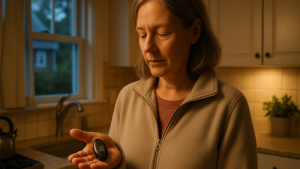


The best self-defense tools for older adults are simple to operate, effective under stress, and give you confidence without requiring extensive training. After three decades in personal security, I’ve learned that the most powerful protection comes from tools that feel natural in your hands and work reliably when your heart is racing. Your safety doesn’t depend on complicated gadgets—it depends on having the right tool at the right moment.
I started Family Security USA because I saw too many seniors feeling vulnerable and overwhelmed by confusing security options. Every week, I speak with grandparents who want to feel safe during their evening walks, independent adults who refuse to let age limit their freedom, and adult children worried about their parents’ safety. These conversations always come back to the same truth: the best protection is the one you’ll actually carry and can use confidently when it matters most.
Your decades of life experience have taught you to trust your instincts and value reliable solutions over flashy promises. That wisdom serves you well when choosing personal protection. The tools I recommend to families like yours aren’t about intimidation or complex techniques—they’re about giving you options when someone crosses the line. Let me walk you through the protection strategies that have worked for thousands of my customers who share your priorities: simplicity, reliability, and peace of mind.
What makes a self-defense tool suitable for older adults?
A truly effective self-defense tool for older adults must pass three critical tests: it works with limited grip strength, operates intuitively under stress, and requires minimal maintenance. I’ve watched too many well-meaning family members buy elaborate devices that end up in junk drawers because they’re too complicated for real-world use.
The most important factor is immediate accessibility. Your protection tool needs to be something you can grab and activate within seconds, even if your hands aren’t as steady as they once were. Traditional pepper sprays with tiny buttons or safety mechanisms that require perfect finger placement fail this test. The best options have large, easy-to-press activation areas and simple operation that works even when you’re flustered or wearing gloves.
Weight and size matter more than you might think. A heavy device becomes a burden that you’ll eventually leave at home, and something too small gets lost in a purse or pocket when you need it most. The sweet spot is a tool that feels substantial enough to control confidently but light enough to carry without thinking about it. I always tell my customers to imagine carrying their chosen tool for a 20-minute walk—if it feels cumbersome during our conversation, it’ll definitely feel worse when you’re actually using it.
Reliability trumps features every time. You need something that works consistently in cold weather, hot weather, after sitting in a car for months, and even if you haven’t tested it recently. Complex electronic devices with multiple buttons, LCD displays, or smartphone apps introduce failure points that could leave you defenseless. The most dependable tools have simple mechanical operation and minimal electronic components.
Which personal alarms work best for seniors?
Personal alarms are often the perfect starting point for older adults because they’re simple to use and create immediate attention without requiring you to aim or make contact with an attacker. The best models produce 130+ decibels of ear-piercing sound—loud enough to disorient someone nearby and alert people several blocks away.
The activation method determines whether you’ll actually be able to use your alarm when stressed. Pull-pin alarms work beautifully because you simply grab the device and yank the pin—there’s no fumbling for tiny buttons or trying to remember which way to slide a switch. Once activated, these alarms continue sounding until you reinsert the pin, giving you time to get away or get help. I recommend models with a wrist strap so you can pull the pin even if someone grabs your hand.
Sound alone isn’t enough—placement matters tremendously. Your alarm should be somewhere you can reach it instantly: attached to a keychain you always carry, clipped to your jacket, or in an outside pocket you can access without looking. I’ve seen people defeat their own protection by burying their alarm in a purse with a dozen other items. The few seconds you lose digging around could be the difference between safety and danger.
Battery life becomes crucial for devices you may not use for months at a time. Look for alarms with replaceable batteries rather than built-in rechargeable ones. A rechargeable alarm is useless if you forget to charge it, but a good alkaline battery can sit ready for years. Test your alarm monthly—not just to check the battery, but to keep your muscle memory sharp for accessing and activating it quickly.
How do pepper sprays compare for older adults with limited mobility?
Pepper spray can be extremely effective for older adults, but only if you choose the right formulation and delivery system. Traditional small canisters with tiny actuator buttons frustrate many of my older customers because they require precise aim and firm finger pressure. The solution is choosing larger units with broader spray patterns and easier activation mechanisms.
Gel formulations often work better than traditional sprays for older adults because they’re less affected by wind and create less risk of blowback. When you’re dealing with arthritis or reduced grip strength, the last thing you want is your own protection spray affecting you instead of your attacker. Gel streams also tend to stick to the target better, making your limited supply more effective even if your aim isn’t perfect.
The range advantage of pepper spray becomes especially important when mobility is limited. A good spray gives you 8-12 feet of distance, meaning you can protect yourself before someone gets close enough to physically overpower you. This standoff distance is invaluable if you use a walker, cane, or have trouble moving quickly. You’re not trying to outrun anyone—you’re creating space and opportunity to escape safely.
Consider larger units designed for home defense rather than tiny keychain versions. A 4-ounce canister is easier to hold steady, has more capacity for multiple uses, and typically features better spray patterns than tiny personal units. Yes, it’s less convenient to carry, but if you’re dealing with reduced dexterity, the trade-off in usability is worth it. You can keep larger units by your front door, in your car, or anywhere you spend significant time.
Are stun guns practical for seniors with arthritis or limited grip strength?
Stun guns can work well for older adults, but success depends entirely on choosing models designed for easy handling rather than maximum power. The most important feature isn’t voltage—it’s having a grip design that accommodates reduced hand strength and provides multiple ways to maintain control of the device.
Wrist strap disable pins offer crucial protection for seniors using stun guns. If someone tries to take your device away, the pin pulls out and disables the unit, preventing your own tool from being used against you. This feature becomes especially important if you have concerns about being overpowered or losing your grip during a struggle. It’s a simple safety mechanism that provides psychological comfort as much as physical protection.
The contact method determines whether you can use a stun gun effectively with limited mobility. Look for units with wide contact areas rather than small probe points—you’re more likely to make effective contact even if your aim isn’t perfect or your hand shakes. Some models feature wrap-around contact strips that work regardless of exactly how you hold the device against an attacker.
Battery maintenance becomes a bigger consideration with stun guns because they lose charge over time even when not used. Many of my senior customers prefer models with wall-plug charging built into the device—no separate cables to lose or remember. Just plug the unit directly into any standard outlet once a month. This eliminates one more step that could leave you unprotected if you forget to maintain your device.
Consider the psychological deterrent effect as much as the physical one. Often, the bright arc and crackling sound of a stun gun is enough to make someone think twice about approaching you. You’re not necessarily planning to make contact—you’re demonstrating that you’re prepared to defend yourself and creating doubt in someone with bad intentions.
What about walking sticks and canes as defensive tools?
A walking stick or cane you already use for mobility can become an excellent defensive tool with minimal modification or training. This approach feels natural because you’re not learning to handle a new device—you’re simply thinking differently about something already in your hands. The psychological advantage is significant: attackers often underestimate someone with a mobility aid, giving you the element of surprise.
The key is choosing or modifying your mobility aid with defense in mind. A lightweight aluminum cane won’t provide much striking force, but a solid hardwood walking stick can deliver significant impact. The length becomes your advantage—you can keep someone at distance while maintaining your own balance and mobility. You’re not trying to overpower anyone; you’re buying time and creating opportunities to escape.
Simple techniques work better than complex martial arts moves. A firm thrust to the midsection, a strike to the shins, or using your cane to hook someone’s leg can create the distraction you need to get away safely. The goal isn’t to win a fight—it’s to break free from a grab or create enough space to use another defensive tool or escape to safety.
Consider walking sticks with built-in features like hidden stun gun capabilities or personal alarms. These combination tools give you both mobility support and protection options without having to carry multiple devices. Just ensure that any modifications don’t compromise the primary function of helping you walk safely.
How can older adults carry and access defense tools effectively?
The best defensive tool is worthless if you can’t reach it when you need it. After working with thousands of customers over the years, I’ve learned that carrying strategy matters as much as device selection. Your protection system needs to work with your daily routines, not against them.
Multiple access points provide the best security. Rather than relying on one device in one location, consider having protection options in several places: a personal alarm on your keychain, pepper spray in your jacket pocket, and a backup alarm in your purse or fanny pack. This redundancy means you’re never completely without options if one device fails or isn’t accessible.
Clothing choices can enhance or defeat your protection strategy. Jackets with large, easily accessible outside pockets work better than garments that require you to unzip or unfasten closures. Consider adding a small belt holster or clip-on carrier for your primary defense tool—something that keeps it positioned consistently and accessible with one hand.
Practice accessing your tools regularly, but do it realistically. Try reaching your pepper spray while carrying groceries, or activating your alarm while wearing winter gloves. These simple tests reveal whether your carrying system actually works under real conditions. Most people discover they need to adjust their approach after trying to access their tools with full hands or while seated.
Home positioning deserves special attention. Keep protection tools in consistent locations throughout your home: by the front door, on your nightstand, and anywhere you spend significant time. The goal is never being more than a few steps from protection, regardless of which room you’re in when trouble appears at your door.
Frequently Asked Questions About Self-Defense Tools for Older Adults
Do I need training to use personal defense tools effectively?
Basic familiarization is essential, but extensive training isn’t required for simple tools like personal alarms or pepper spray. Practice accessing and activating your chosen devices until the motions become automatic. The most important training is mental preparation—thinking through scenarios and having a plan for different situations.
What should I do immediately after using a self-defense tool?
Your priority is getting to safety and calling 911. Don’t stay to see if your defensive tool “worked”—use the distraction or deterrent effect to create distance and get help. Move to a public area, safe location, or toward other people. Report the incident to police even if you weren’t physically harmed.
Are there legal restrictions on carrying self-defense tools as a senior?
Laws vary by location, but personal alarms are legal everywhere, and pepper spray is legal in most areas with some restrictions on size or concentration. Stun guns have more varied regulations. Check your local and state laws before purchasing, and be aware that rules may differ when traveling to other states.
How often should I replace or maintain my self-defense tools?
Personal alarms with replaceable batteries should be tested monthly and batteries replaced annually. Pepper spray typically expires after 2-4 years and should be replaced even if unused. Stun guns need monthly charging and should be tested regularly. Mark replacement dates on your calendar to ensure your tools remain effective.
What if I’m not strong enough to operate traditional defense tools?
Focus on tools that require minimal physical strength. Personal alarms work with a simple pull motion, and many pepper sprays now feature large, easy-press actuators. Some stun guns activate with light switch-style buttons rather than small pressure points. Prioritize accessibility and ease of use over maximum power.
Should I tell family members about my self-defense tools?
Yes, trusted family members should know what tools you carry and where you keep them at home. This helps emergency responders if you’re ever incapacitated, and family can assist with maintenance reminders. However, avoid discussing your protection strategy with casual acquaintances or on social media.
Can self-defense tools be taken away and used against me?
This is possible with any defensive tool, which is why many stun guns include disable pins that deactivate the device if pulled away. Personal alarms and pepper spray are less likely to be used against you effectively. The key is creating distance and opportunity to escape rather than engaging in prolonged struggles.
Are expensive defense tools significantly better than basic models?
Not necessarily. The most important factors are reliability and ease of use, not advanced features or high price tags. A simple, dependable personal alarm or pepper spray often provides better real-world protection than complex devices with multiple functions. Focus your budget on quality basics rather than gadget-heavy options.
Your safety doesn’t require you to become someone you’re not or sacrifice the independence you’ve earned over a lifetime. The right defensive tools simply give you more options when faced with the unexpected. I’ve spent decades helping families find that balance between reasonable precaution and confident living, and I’m here to guide you through the same process.
Remember that the most powerful protection comes from trusting your instincts, staying aware of your surroundings, and having reliable tools you know how to use. You’ve navigated decades of life successfully—these tools just ensure you can continue doing so with confidence. Whether you choose a simple personal alarm, pepper spray, or a combination of options, you’re taking control of your security and refusing to let fear dictate your choices.
Start with one tool that feels right for your situation and build your confidence from there. Visit our complete selection of self-defense tools and safety strategies to find the protection system that fits your lifestyle. Your peace of mind is worth the investment, and your family’s worry will transform into pride when they see you taking charge of your own security. Be Prepared and Be Safe!