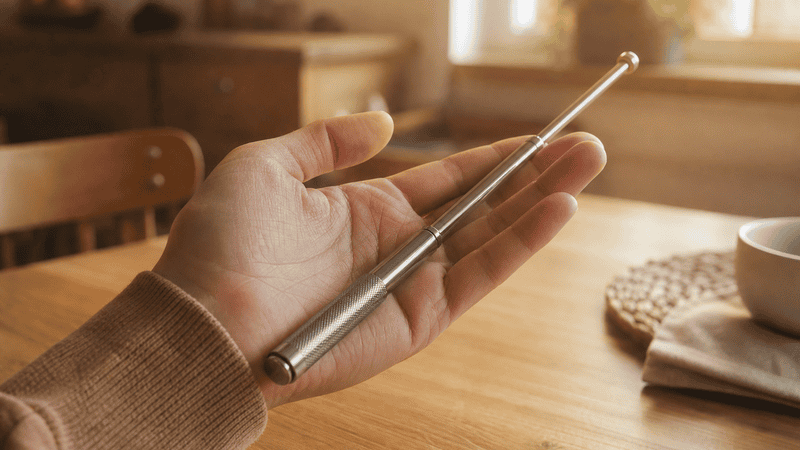
Telescopic batons are most commonly made from hardened steel or aircraft-grade aluminum — two materials chosen specifically for their ability to absorb impact, resist deformation, and hold up under real-world stress. Some models incorporate reinforced polymer components in the handle or locking collar, but the striking shaft itself is almost always metal. The material determines how the baton feels in your hand, how it performs when it matters most, and how long it will serve you faithfully.
I want to talk to you about this the way I would talk to a neighbor sitting at my kitchen table — because I have spent more than thirty years in the security industry, and I know that when someone starts asking about what a baton is made of, they are not just curious. They are starting to think seriously about protecting the people they love. That matters to me. And I want to make sure you walk away from this conversation with real answers, not vague generalities.
Why does the material inside a telescopic baton matter for self-defense?
The material a telescopic baton is made from is not just a technical detail — it is the foundation of everything the tool can do for you when you need it most. Think about what you are asking this device to do: collapse down small enough to fit in a pocket or purse, then extend quickly and lock securely into a rigid striking instrument. That is a remarkable engineering demand, and the material either meets it or fails you.
Hardened steel is the most traditional choice, and for good reason. It is dense, heavy enough to generate meaningful force even with a short swing, and extraordinarily resistant to bending under pressure. When a steel baton locks open, it locks solid. There is no give, no flex, no second-guessing. That confidence matters in a stressful moment more than most people realize until they are standing in one.
Aircraft-grade aluminum offers a different kind of value. It is significantly lighter than steel — sometimes by forty percent or more — without sacrificing the structural integrity needed for a reliable defensive tool. For someone who carries their baton every single day, that weight difference becomes meaningful over weeks and months. It also tends to resist corrosion more naturally than untreated steel, which is worth considering if you live in a humid climate or carry the baton in a bag where it may be exposed to moisture.
The choice between these two materials is genuinely personal. It comes down to how you carry, how you train, and what feels right in your hand. That is a conversation I am always glad to have with our customers — because the best baton for your neighbor may not be the best one for you.
What types of steel are used in telescopic batons, and does the grade matter?
Not all steel is created equal, and when it comes to a tool you are trusting with your family’s safety, the grade absolutely matters. Most quality telescopic batons use carbon steel or stainless steel in their construction, with better models specifying heat-treated or hardened variants of those alloys.
Carbon steel is strong and dense, and when properly heat-treated, it resists deformation extremely well. The trade-off is that it requires a little more care — carbon steel can rust if it is not kept lightly oiled or stored in dry conditions. That is a small maintenance commitment for a tool that may serve you for years, and most people find it easy to work into a routine.
Stainless steel alloys add corrosion resistance, which makes them a practical choice for everyday carry in a wider range of environments. Some of the sturdier options on the market — including the kind of solid steel baton we carry here at Family Security USA — use materials that hold up beautifully over time with minimal upkeep.
The grade matters because low-quality steel can flex or deform on impact, which is both ineffective and potentially dangerous. A baton that does not perform as expected in a defensive situation is worse than no baton at all — it introduces hesitation at exactly the wrong moment. When I recommend a baton to someone, I always start with the material specification. It tells me immediately whether the manufacturer was serious about what they built.
How does the construction of a telescopic baton affect how it opens and locks?
The way a baton is built from the inside out determines how reliably it deploys and how securely it holds its extended position. This is the part that people do not always think about when they are first shopping — but experienced carriers know it well.
A quality telescopic baton uses a friction-lock or spring-assisted mechanism that snaps the nested steel or aluminum tubes into alignment and holds them there under force. The precision of the tube tolerances — how exactly the sections are machined — is directly tied to the quality of the materials used. Tight tolerances require harder, more precisely worked metals. Loose tolerances, often the result of lower-grade alloys or poor manufacturing, produce a baton that wobbles or collapses unexpectedly under pressure.
The tip of the baton — sometimes called the striking cap or end cap — is typically a hardened metal disc, often the same alloy as the shaft or occasionally a harder insert material. This is where force is concentrated, and it needs to be as solid as the rest of the tool. On well-built batons, this tip is welded or press-fitted with no play whatsoever.
The handle section is often where polymer or rubber components appear, and this is completely intentional. A rubberized or textured grip gives you positive control under stress, when hands may be shaking or wet. The materials used in the grip do not need to be metal — they need to keep the baton in your hand when it matters. Our compact collapsible baton is a great example of how thoughtful grip construction makes a defensive tool genuinely easier to use under pressure.
What makes some telescopic batons higher quality than others?
After more than three decades in this industry, I can tell you that the difference between a baton you can trust and one that will let you down is almost always traceable to three things: material sourcing, manufacturing precision, and the locking mechanism.
High-quality batons use certified metal stock — steel or aluminum with documented hardness ratings and consistent metallurgical properties. Lower-cost alternatives often use recycled or ungraded alloys that pass visual inspection but fail under impact stress. You cannot see this difference in a product photo. You feel it the moment the baton makes contact with something — or worse, when it should lock and does not.
Manufacturing precision means that the tubes nest and extend with smooth, deliberate action rather than sticking, grinding, or flopping. A well-built baton deploys with a single controlled motion. It should not require two hands, it should not require you to shake it repeatedly, and it should not feel loose when open. That consistency comes from tight machining tolerances, which are only possible with quality source materials.
The locking collar — the mechanism that holds everything rigid when extended — is the most stress-critical component in the entire assembly. On better batons, this collar is machined metal with a positive-click engagement. On cheaper builds, it may be polymer or an imprecise friction-fit that softens over time. For a tool you are counting on, that distinction is everything.
If you are exploring your options and want to see the difference quality construction makes in practice, I encourage you to take a look at our full selection of telescopic batons for self-defense. I have personally reviewed every option we carry, and nothing makes it onto our shelves unless I would trust it for my own family.
Are there telescopic batons that combine a baton with other defensive features?
Yes — and for many of our customers, a combination tool turns out to be the most practical solution. I love this category of product because it reflects real life: most people do not want to carry three separate devices, and a well-designed combination tool gives them multiple layers of protection in one compact package.
The most compelling combination option I can share with you is the stun baton — a telescopic baton that also delivers an electric shock along the shaft. This gives you both reach and an additional deterrent layer in a single tool. The construction of these devices is especially important because the metal shaft must serve as both a structural striking element and an electrical conductor, which demands careful engineering and quality materials throughout.
Our extended reach stun baton is exactly this kind of thoughtfully designed tool. The steel shaft extends to give you meaningful distance from a threat while the stun capability adds a non-contact deterrent that most aggressors want nothing to do with. For someone who wants to feel genuinely prepared without carrying multiple devices, this is often where I start the conversation.
There are also batons with built-in LED flashlights, which serve a dual purpose — illuminating your path at night while serving as a defensive tool. These are especially popular with customers who walk dogs in the evening or park in poorly lit areas. The additional components are typically housed in the handle section, keeping the metal shaft pure and uncompromised for structural integrity.
How should I care for a telescopic baton to keep it performing reliably?
A quality baton, properly maintained, will serve you for many years. And caring for it does not take much — just a few minutes of attention every month or so, the same way you might care for any other precision tool in your home.
For steel batons, a light wipe-down with a lightly oiled cloth after exposure to moisture or humidity keeps corrosion from taking hold. You do not need anything special — a drop of mineral oil or a quality silicone spray on a cloth is entirely sufficient. Pay particular attention to the joints between tube sections, where moisture can collect if you are not careful.
Keep the locking mechanism free of debris. Grit and dust can work their way into the collar over time, especially if you carry the baton in a bag or pocket without a protective sleeve. A soft brush and a brief wipe-down every few weeks keeps things moving smoothly.
Periodically extend and retract the baton deliberately — not in a practice swing, just a slow, controlled deployment — to confirm the lock engages cleanly and the return motion is smooth. This takes about thirty seconds and tells you immediately whether anything needs attention. If the lock feels soft or the sections wobble, it is time to evaluate whether the baton needs service or replacement.
Storing your baton in its collapsed state in a dry location protects both the metal and the locking mechanism. A small drawstring pouch or a dedicated sleeve keeps it clean and ready without any fuss. For more guidance on choosing and caring for your defensive tools, our full guide on steel batons for self-defense walks through everything you need to know.
Frequently Asked Questions About Telescopic Baton Materials
What is the most common material used in telescopic batons?
The most common material is hardened steel, followed by aircraft-grade aluminum. Steel offers maximum density and striking force, while aluminum provides a lighter carry weight with comparable structural strength. Both are reliable choices — the right one depends on how you plan to carry and use the baton. Most quality batons use metal throughout the shaft with rubberized or polymer grip sections for comfort.
Is an aluminum telescopic baton as strong as a steel one?
Aircraft-grade aluminum batons are genuinely strong and perform reliably in defensive situations, but steel batons are denser and generate more force per strike due to their higher mass. For everyday carry where weight is a concern, aluminum is an excellent choice. For maximum impact force when weight is secondary, hardened steel has the edge. Both materials are vastly superior to low-grade alloys found in novelty or decorative batons.
Can a telescopic baton rust or corrode?
Carbon steel batons can develop surface rust if exposed to moisture without proper care. Stainless steel and aluminum batons are significantly more corrosion-resistant. A simple maintenance habit — wiping down the baton after exposure to rain or humidity and applying a light coat of oil on carbon steel models — prevents rust entirely. Storing your baton in a dry location also extends its service life considerably.
Do the metal sections of a telescopic baton ever bend or break?
On quality batons made from certified hardened steel or aircraft-grade aluminum, bending or breakage under normal defensive use is extremely rare. Low-quality batons made from ungraded or recycled metals can deform under impact stress. This is precisely why material quality matters so much — a baton that fails during use provides no protection at all. Always purchase from reputable sources with clear material specifications.
What is the tip of a telescopic baton made of?
The striking tip is typically a hardened metal cap — usually the same alloy as the shaft or a harder insert material — press-fitted or welded to the end of the outermost tube. On well-built batons, this tip has zero play or wobble. It concentrates impact force at the point of contact. Some batons use a reinforced steel disc tip specifically designed for this purpose.
Are there telescopic batons made of non-metal materials?
True defensive telescopic batons intended for personal protection are almost exclusively metal in the shaft sections. Some training batons or costume props use rubber or plastic throughout, but these have no place in a real safety plan. If you encounter a baton marketed as self-defense equipment that is not primarily metal in construction, treat that as a red flag about its overall quality and reliability.
Does a heavier baton mean it is better for self-defense?
Not necessarily. A heavier baton — typically steel — generates more force per strike due to greater mass, but a lighter baton can be deployed faster and carried more comfortably over time. The best baton is the one you will actually carry consistently and can deploy with control under stress. Weight is one factor among several; material quality, construction precision, and ergonomics matter just as much.
What should I look for when buying a telescopic baton to make sure it is quality?
Look for clear material specifications — hardened steel or aircraft-grade aluminum, not just “metal.” Confirm the locking mechanism is described as a positive-lock or friction-lock collar, not a vague “secure lock.” Check that the manufacturer provides the extended and collapsed lengths so you know exactly what you are getting. Purchase from a dealer who stands behind what they sell and can answer your questions before and after your purchase.
Don’t wait until it’s too late. Equip yourself and your Loved Ones with reliable, Self Defense Tools and take control of your personal safety. All the products listed make great, low-cost gifts. Keeping you and your loved ones safe.
Free shipping on orders over $25.
Be Prepared and Be Safe!