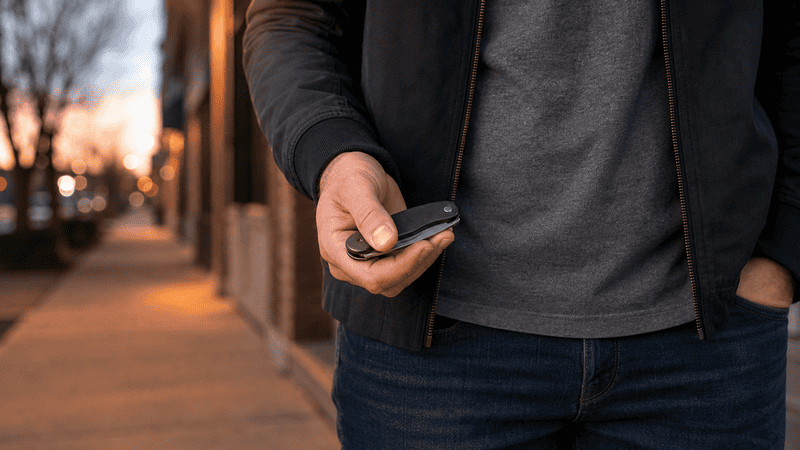
The best knife for self-defense is not necessarily the biggest, the sharpest, or the one that looks the most intimidating. For most people in most situations, a compact, legally carried folding knife with a blade under three inches — paired with the skill to deploy it under stress and the legal knowledge to carry it where you live — is the most practical choice. But here is what most buying guides will not tell you: a knife is rarely the optimal first tool for personal protection.
I know that answer surprises people. After more than 30 years working in personal security, I have watched the conversation around self-defense knives follow the same predictable script — bigger blade, harder steel, more aggressive look. And I want to challenge that script right from the start, because it leads a lot of good people toward tools that do not actually serve them well. Let me walk you through what the research, the law, and real-world experience actually suggest — and show you a smarter way to think about this entire category.
Why is a knife considered one of the hardest self-defense tools to use effectively?
Most people assume that because a knife is sharp, it is automatically effective for protection. That assumption deserves a hard look. Deploying a folding knife under sudden, high-adrenaline stress requires a trained, practiced hand. Studies on law enforcement response under stress consistently show that fine motor skills degrade dramatically in genuine threat scenarios — and opening, gripping, and controlling a knife under those conditions is a fine motor task.
Unlike a personal alarm that activates with a single pull, or a pepper spray that creates immediate distance between you and a threat, a knife requires you to be within arm’s reach of danger to use it at all. That proximity is exactly where you do not want to be. This is not a reason to dismiss knives entirely — it is a reason to understand them honestly before you rely on one as your primary layer of protection.
The Innovation insight here is this: the tool everyone assumes is the go-to self-defense weapon is actually one of the more demanding options available. Recognizing that gap between assumption and reality is what separates a prepared person from someone carrying false confidence.
What makes a folding knife better than a fixed blade for everyday carry self-defense?
Fixed blades are stronger and deploy faster — no question. But in most American cities and counties, carrying a fixed-blade knife in a concealed manner is restricted or outright prohibited. A folding knife carried in a pocket or clipped to a waistband is legal in far more jurisdictions, which makes it the practical choice for the vast majority of people who want a knife as part of their everyday carry setup.
For everyday carry purposes, look for a folding knife with a blade between 2.5 and 3.5 inches, a reliable locking mechanism, and a grip that stays secure even in a damp or stressed hand. One-hand opening capability — either through a thumb stud, flipper tab, or assisted opening mechanism — is worth prioritizing, because two-handed deployment in a real scenario is rarely available to you.
If you are exploring your options in this category, our EDC knife for men collection is a solid place to start — practical, well-built options sized for real daily carry rather than display cases. For buyers watching their budget without wanting to sacrifice function, our affordable folding knife options cover a range of reliable choices at accessible price points.
Does blade shape or steel type actually matter for self-defense?
This is where the online knife community can send buyers down a very deep rabbit hole. The honest answer: for personal protection purposes, blade shape and steel composition matter far less than fit, function, and your own comfort deploying the knife quickly and confidently.
A drop-point blade is the most versatile and forgiving shape for general use — it handles everyday tasks competently and does not snag during draw. A tanto point is stronger at the tip and popular in tactical circles, but it is more specialized and less practical as an everyday tool. Clip-point blades offer a more aggressive profile, but the tip is more fragile under lateral stress.
On steel: anything in the mid-range stainless category — the kinds of alloys used in well-built production knives — will hold a functional edge through normal use and real-world carry. You do not need exotic steel. You need a blade that you will actually sharpen, carry consistently, and practice with. A well-maintained mid-range knife outperforms a premium blade that sits in a drawer because the owner finds it too precious to carry.
What are the legal risks of carrying a knife for self-defense?
This is the part most buying guides skip, and skipping it is a serious mistake. Knife laws in the United States are a patchwork — they vary by state, county, and municipality, and they change. Blade length limits, assisted-opening restrictions, concealment rules, and prohibited locations all vary widely. What is perfectly legal to carry in one city may result in a misdemeanor or felony charge three miles away.
I am not in a position to give you legal advice, and I would not want to — that is what a qualified attorney in your jurisdiction is for. What I will tell you is this: before you commit to carrying any knife as a self-defense tool, spend thirty minutes understanding the specific laws in your area. The legal risk of carrying a prohibited knife is a layer of vulnerability that no blade quality can offset.
This is another place where the Innovation lens is valuable. The conventional wisdom says “just carry a knife and figure out the details later.” The smarter move is to treat legal carry knowledge as part of the tool itself — inseparable from the hardware.
How does a knife compare to other non-lethal self-defense options for everyday carry?
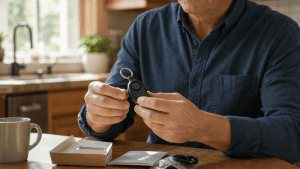
Here is the reframe that most people need: a knife is not in the same category as pepper spray, personal alarms, or stun devices when it comes to legal exposure and deployment complexity. Those tools are specifically designed for civilian self-defense, optimized for fast deployment under stress, and — in the case of pepper sprays and alarms — create immediate protective distance rather than requiring close contact.
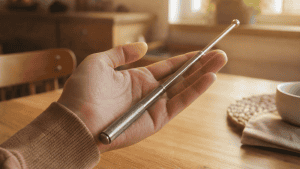
A high-output pepper spray like a fast-access pepper spray carried correctly can stop a threat at ten to fifteen feet. A 130dB personal alarm draws immediate attention and can disrupt an attacker’s focus before any physical confrontation begins. A stun device requires contact but delivers a powerful deterrent effect without the legal complexity that a knife can create in an aftermath scenario.
I am not suggesting you abandon the idea of carrying a knife. I carry one myself — it is one of the most useful everyday tools I own. But I carry it alongside other layers of protection, not instead of them. That layered approach is what actually reflects 30 years of working in this field. If you want a broader view of how these tools fit together, our guide to the best things to carry for self-defense walks through exactly that framework.
Is an OTF automatic knife a better self-defense option than a standard folding knife?
Out-the-front automatic knives deploy faster than traditional folders and require minimal hand strength to open — advantages worth considering. However, OTF knives are heavily regulated. Many states prohibit them entirely for civilian carry, and the legal landscape is even more variable than standard folding knife law.
If you are in a jurisdiction where OTF carry is legal and you have taken the time to confirm that, they offer genuine deployment advantages. Our best OTF automatic knife guide covers the options worth considering in that category. But if you have not done that legal research, a well-chosen assisted-opening folding knife gives you most of the deployment benefit with far fewer legal complications.
Should beginners practice with a training knife before carrying for self-defense?
Yes — and this is one of the most consistently overlooked pieces of advice in this entire conversation. A training knife, or a practice balisong if you are interested in the butterfly knife platform, lets you develop muscle memory for draw, grip, and blade awareness without any risk of injury during practice. That repetition is what makes deployment reliable under stress.
Our butterfly knife for practice options are specifically designed for this kind of skill development — safe to train with, realistic in feel, and genuinely useful for anyone who wants to build confidence and competence before they commit to a carry setup. Practicing with a training tool is not a beginner’s shortcut. It is what experienced carriers do.
Frequently Asked Questions About Choosing the Best Knife for Self-Defense
What blade length is best for a self-defense knife?
For most people in most jurisdictions, a blade between 2.5 and 3.5 inches offers the best balance of legal carry compliance and practical function. Blades over four inches face more legal restrictions and are harder to carry discreetly. A shorter blade carried legally and consistently is more valuable than a longer blade that creates legal exposure or gets left at home.
Is a serrated or plain edge better for self-defense?
A plain edge is more versatile for everyday tasks and easier to sharpen in the field. A serrated edge cuts through fibrous materials more aggressively but is harder to maintain and less precise. For most everyday carry buyers, a plain edge or a partially serrated combo edge is the more practical choice. The difference matters less than keeping whichever blade you carry properly sharp.
Can I legally carry a knife for self-defense in all U.S. states?
No. Knife carry laws vary significantly by state, county, and city. Blade length limits, concealed carry rules, assisted-opening restrictions, and prohibited locations all differ by jurisdiction. Before carrying any knife for self-defense, research the specific laws where you live, work, and travel. When in doubt, consult a local attorney — the legal risk of carrying incorrectly is real and serious.
Is pepper spray a better self-defense option than a knife?
For most civilian buyers, yes — particularly as a primary tool. Pepper spray works at a distance of ten to fifteen feet, requires minimal training to deploy effectively, creates immediate distance from a threat, and carries significantly less legal complexity than a knife in most jurisdictions. It is also specifically designed for self-defense use, which matters in a legal aftermath. A knife and a pepper spray used together as layered protection is smarter than relying on either alone.
Do I need self-defense training to carry a knife safely?
Practical training makes an enormous difference. Deploying a folding knife quickly and safely under stress is a physical skill that degrades under adrenaline without practice. At minimum, practice drawing, opening, and gripping your carry knife regularly at home until the motion is automatic. Working with a training knife or taking a basic knife handling course will significantly improve your ability to use a knife effectively if you ever need to.
What is the difference between an assisted-opening and an automatic knife?
An assisted-opening knife requires you to initiate the blade movement with a thumb stud or flipper, after which a spring mechanism completes the opening. An automatic knife — including OTF designs — opens fully via spring mechanism with the press of a button or switch. Assisted openers are legal in most U.S. jurisdictions. Automatic knives face much stricter regulation and are prohibited in many states. Always verify local law before purchasing either type.
Should a knife be my only self-defense tool?
No — and this applies regardless of your experience level. A layered approach to personal protection is always more effective than relying on a single tool. A personal alarm, a pepper spray, and a knife each cover different scenarios and distances. Building a carry setup that addresses multiple situations gives you options when circumstances do not cooperate with a single-tool strategy. Most experienced personal safety practitioners carry at least two complementary tools.
Are expensive knives better for self-defense than budget options?
Not necessarily. A mid-priced folding knife from a reputable manufacturer — kept sharp, carried consistently, and practiced with regularly — will outperform an expensive premium knife that stays home because the owner is reluctant to subject it to daily wear. Spend what you need to get a reliable locking mechanism, a comfortable grip, and a blade that holds an edge reasonably well. Beyond that, consistency of carry and practice matter more than price.
What I hope you take away from this conversation is not a specific blade recommendation — it is a genuinely different way of thinking about the question. The best knife for self-defense is the one that fits your lifestyle, your local laws, your physical capability, and your commitment to practicing with it. More often than not, it works best as one piece of a broader personal protection plan, not as the whole plan by itself.
I am here to help you build that plan in a way that actually fits your life. Whether you are just starting to think about personal safety or you are refining a carry setup you have had for years, browse our full range of personal protection options and reach out if you want guidance tailored to your specific situation. That is exactly what we are here for.
Don’t wait until it’s too late. Equip yourself and your Loved Ones with reliable, Self Defense Tools and take control of your personal safety. All the products listed make great, low-cost gifts. Keeping you and your loved ones safe.
Free shipping on orders over $25.
Be Prepared and Be Safe!