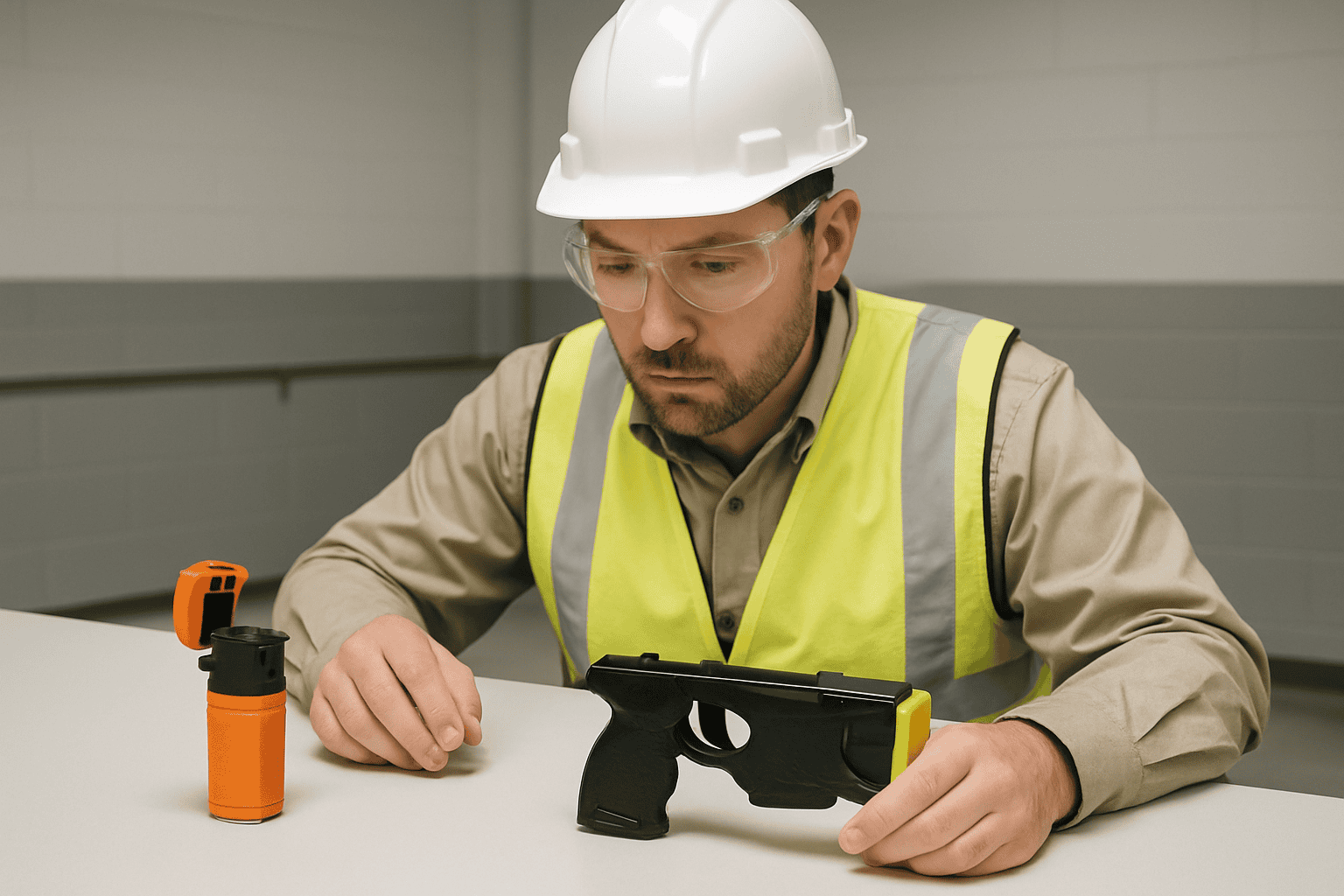

The critical difference: TASERs shoot projectile probes up to 15 feet while stun guns require direct contact. TASERs offer distance advantage but cost more and need training. Stun guns are simpler, more affordable, but demand you get dangerously close to an attacker. Your choice depends on your training level, budget, and specific threat scenarios.
I need to stop you right here before you make a potentially dangerous mistake. Too many people walk into stores asking for a “TASER” when they actually need a stun gun, or vice versa. This confusion is not just about spending money incorrectly—it is about choosing the wrong tool when your safety depends on making the right choice.
After three decades in the security industry, I have seen the consequences of this confusion firsthand. The difference between these two devices goes far beyond price tags or brand names. We are talking about fundamental differences in how they work, when they work, and whether they will work when you need them most. Let me walk you through the critical distinctions that could determine whether your self-defense choice protects you or leaves you vulnerable.
How Do Stun Guns and TASERs Actually Work Differently?
Here is where the confusion starts and where it gets dangerous: these devices use completely different mechanisms to stop an attacker. A stun gun delivers electrical shock through direct contact with your attacker’s body. You must press the device against them—skin contact or thin clothing—for it to work. The electrical current flows between two metal probes on the device, disrupting the attacker’s nervous system and causing muscle contractions that make coordinated movement extremely difficult.
TASERs work from a distance. When you pull the trigger, the device fires two barbed probes connected to thin wires. These probes can penetrate up to two inches of clothing and deliver the electrical pulse from up to 15 feet away. The current travels down the wires, creating a circuit between the two probes embedded in the attacker’s body. This distance capability changes everything about how and when you can use the device.
The voltage numbers you see advertised—often millions of volts—are misleading for both devices. What stops an attacker is the amperage and the specific waveform of the electrical pulse, not the voltage. Both devices are designed to be non-lethal when used properly, but their effectiveness depends entirely on proper deployment and understanding their limitations.
What Are the Real Distance and Deployment Differences?
Distance is not just a convenience factor—it is a survival factor. With a stun gun, you must be within arm’s reach of your attacker. This means you are in their strike zone, grab zone, and weapon zone. You are betting that you can make contact with the stun gun before they can overpower you, and that the device will work long enough to allow your escape.
TASERs give you a 15-foot buffer zone, but only for one shot. Once fired, most civilian TASER models cannot fire again without reloading new cartridges—a process that takes precious seconds under stress. Miss your target or fail to achieve good probe contact, and you have essentially turned your TASER into an expensive stun gun for backup contact use.
Here is what the advertisements do not tell you: both devices require sustained contact or connection to be effective. A quick touch with a stun gun will cause pain but probably will not incapacitate an attacker. Similarly, if only one TASER probe makes contact, or if they are too close together on the target, the effectiveness drops dramatically. You need good probe spread—ideally 12-18 inches apart on the target’s body—for maximum effect.
Which Device Has Better Stopping Power for Real Attacks?
Stopping power depends on factors that most buyers never consider. TASERs generally deliver more consistent incapacitation because they affect larger muscle groups when properly deployed. The probe spread creates a wider electrical field that can lock up major muscle groups, potentially dropping an attacker immediately.
Stun guns vary dramatically in effectiveness. Quality stun gun models with proper amperage can be highly effective, but cheaper units may only cause pain without true incapacitation. The effectiveness also depends on your ability to maintain contact long enough—typically 3-5 seconds—while an attacker is trying to pull away or strike you.
Here is the reality check: neither device works 100% of the time. Thick clothing can reduce effectiveness for both devices. Heavy jackets, multiple layers, or loose-fitting clothes can prevent good contact for stun guns and may prevent proper probe penetration for TASERs. Some attackers under the influence of certain substances may not respond normally to electrical shock from either device.
That is why I always recommend having a backup plan. Consider pairing your electrical device with pepper spray for a layered defense approach that addresses different failure scenarios.
What Are the Legal Differences Between Stun Guns and TASERs?
Legal restrictions are where this gets complicated, and ignorance will not protect you in court. Many states and municipalities treat stun guns and TASERs differently under the law. Some areas allow stun guns but prohibit TASERs. Others require permits for TASERs but not for stun guns. A few jurisdictions ban both entirely.
The legal differences often stem from the perceived threat level. Because TASERs can be used from a distance and are associated with law enforcement, some jurisdictions classify them more strictly than contact stun guns. Federal regulations also apply differently—TASERs face more shipping restrictions and may require age verification for purchase.
Before purchasing either device, you must research your local and state laws thoroughly. What is legal in your home state may be illegal when you travel. Carrying a prohibited device can result in serious criminal charges, regardless of your intent for self-defense use.
I cannot stress this enough: verify the laws in every jurisdiction where you plan to carry your device. This includes understanding restrictions on carrying in schools, government buildings, airports, and other sensitive locations. Some states require permits or training courses before you can legally carry these devices.
How Much Training Do You Actually Need for Each Device?
Training requirements are vastly different, and this difference could save your life or get you into legal trouble. Stun guns require basic operational knowledge—how to turn them on, how to grip them properly, and how to make effective contact. The learning curve is relatively short, but muscle memory under stress is critical.
TASERs demand significantly more training. You need to understand proper aiming techniques, probe spread requirements, backup battery management, and cartridge replacement under stress. More importantly, you need to practice enough that you can operate the device effectively when your fine motor skills deteriorate under extreme stress.
Most TASER manufacturers recommend formal training courses for civilian users. These courses cover not just operation, but legal use of force, stress response, and decision-making under pressure. Some insurance companies and legal protection plans require documented training before they will cover incidents involving TASER use.
For stun guns, I recommend practicing basic deployment drills and understanding how to maintain solid grip and contact under resistance. Practice scenarios should include what to do if your initial attempt fails and how to create opportunities for effective use while maintaining your safety.
What Do Stun Guns and TASERs Actually Cost to Own?
The real cost goes far beyond the initial purchase price. Quality stun guns typically range from $25 to $150, depending on voltage, features, and build quality. Civilian TASER models start around $300 and can exceed $500 for advanced models with additional features.
But here is where TASER costs add up quickly: replacement cartridges cost $25-30 each, and you need to replace them after every use—whether it is practice or actual deployment. If you train regularly as you should, cartridge costs can exceed your initial device cost within a year.
Stun guns have minimal ongoing costs—primarily battery replacement and occasional maintenance. However, cheaper stun guns often fail when you need them most. Investing in a quality unit from brands like Police, Streetwise, or ZAP typically means better reliability and longer service life.
Factor in training costs if you choose a TASER. Professional instruction can range from $100-300, but this investment is crucial for safe and effective use. Legal protection insurance or plans may also cost $10-30 monthly but can save thousands in legal fees if you ever need to use your device.
Which Device Should You Choose for Your Specific Situation?
Your choice should be based on a realistic assessment of your threats, capabilities, and commitment level. Choose a TASER if you face higher-risk situations, can commit to proper training, and can afford the ongoing costs. The distance advantage makes TASERs superior for home defense scenarios or situations where you might face multiple attackers.
Stun guns make more sense for most people because they require less training, cost less to own and operate, and are legal in more jurisdictions. They are particularly appropriate for close-quarters situations where you might need a deterrent effect as much as actual stopping power. Many police-grade stun gun models offer excellent reliability for civilian use.
Consider your physical capabilities honestly. Do you have the hand strength to maintain a solid grip on a stun gun during a struggle? Can you accurately aim and fire a TASER under stress? Your device is only as effective as your ability to use it when it matters.
Think about your typical environments and threat scenarios. If you primarily need protection while walking to your car in well-lit parking areas, a quality stun gun might be sufficient. If you live in a high-crime area or face specific threats, the range advantage of a TASER might justify the additional complexity and cost.
Frequently Asked Questions About Stun Guns vs TASERs
Can I legally carry both a stun gun and TASER at the same time?
This depends entirely on your local and state laws. Some jurisdictions allow carrying multiple self-defense devices while others restrict or prohibit specific combinations. Always verify your local regulations before carrying any electrical self-defense device, as penalties for violations can be severe.
Which device works better against attackers wearing thick clothing?
TASERs generally perform better against thick clothing because their probes can penetrate up to two inches of material. Stun guns require direct skin contact or contact through very thin fabric to be effective. Heavy coats, multiple layers, or thick materials can significantly reduce stun gun effectiveness.
How long do the batteries last in stun guns versus TASERs?
Quality stun guns typically provide 50-100 activations on a full charge, while TASER batteries can last for multiple years with occasional use. However, TASERs require cartridge replacement after each firing, while stun guns only need periodic battery recharging. Both should be tested monthly to ensure reliability.
Are there any medical conditions that make these devices dangerous to use?
People with heart conditions, pacemakers, or other medical implants should consult their physician before using electrical self-defense devices. Pregnant women should also seek medical advice. While these devices are designed to be non-lethal, individual medical conditions may create additional risks.
What happens if my TASER or stun gun gets wet or damaged?
Most quality devices are designed to be weather-resistant but not waterproof. Moisture can cause malfunctions or reduce effectiveness. If your device gets wet, dry it thoroughly before use and test it in a safe environment. Damaged devices should be replaced immediately as they may not function when needed.
Can attackers take my stun gun or TASER and use it against me?
This is a real risk with any handheld self-defense device. Proper training includes techniques for maintaining control of your device and creating distance after use. Some TASER models include safety features that disable the device if it is taken away. Practice retention techniques as part of your self-defense training.
Do I need special permits to travel with these devices?
Travel regulations vary significantly by state and transportation method. Many states prohibit these devices on aircraft, and some require special permits for out-of-state visitors. Always research destination laws before traveling and consider alternative arrangements for protection during travel.
How often should I practice with my stun gun or TASER?
Monthly testing and quarterly practice sessions are minimum recommendations. For TASERs, practice with training cartridges to maintain proficiency without the cost of live cartridges. Stun gun practice should focus on quick deployment and proper grip under stress. Regular practice ensures your device works and that you can use it effectively under pressure.
The choice between a stun gun and TASER is not just about preference—it is about matching the right tool to your specific needs, capabilities, and commitment level. Neither device is perfect, and both require understanding their limitations and proper use techniques. Your overall self-defense strategy should include training, awareness, and multiple options rather than relying on any single device.
Whatever you choose, commit to proper training and regular practice. The most sophisticated device is useless if you cannot deploy it effectively when your life depends on it. Take the time to understand your local laws, practice regularly, and maintain your equipment properly. Your safety—and the safety of those you protect—depends on making informed decisions and being prepared to use your chosen tools effectively.
Don’t wait until it’s too late. Equip yourself and your Loved Ones with reliable, Self Defense Tools and take control of your personal safety. All the products listed make great, low-cost gifts. Keeping you and your loved ones safe.
Free shipping on orders over $25.
Be Prepared and Be Safe!