Non-lethal self-defense tools like stun guns, pepper spray, and personal alarms are designed to stop a threat without causing permanent harm, but “non-lethal” does not mean “risk-free.” Misuse, poor training, or ignoring manufacturer guidance can still cause injury to you or someone else. Understanding how these tools actually work — and their limits — is the difference between confident preparation and a false sense of security.
I have spent more than thirty years in this industry, and if there is one misunderstanding I hear more than any other, it is this: people assume “non-lethal” means “harmless.” I understand why. The word sounds gentle, almost reassuring. But I want to be honest with you, because that is what neighbors do for each other — non-lethal tools are still powerful tools. They are designed to stop a determined threat, and anything with that much capability deserves your respect and your attention.
This is not meant to alarm you. It is meant to build your confidence the right way — through understanding, not assumption. I am here to guide you through what “non-lethal” really means, what these products can and cannot do, and how to carry one responsibly so it serves you well when it matters most. Let’s walk through this together.
What does “non-lethal” actually mean?
“Non-lethal” means a product is designed and intended to incapacitate or deter a threat without causing death under normal, expected use. It does not mean the product is incapable of causing serious injury. Pepper spray can cause temporary blindness and severe respiratory distress. A stun gun delivers a painful electrical charge meant to disrupt muscle control. These are real physiological effects — that is precisely why they work.
I always tell my customers: the tool is doing its job when it stops someone. That job requires real force, real discomfort, and real interruption of the body’s normal function. When you understand that, you carry with a level head instead of a false sense that nothing bad can possibly happen. That clarity is what builds genuine trust between you and your equipment.
Can non-lethal weapons still cause serious injury?
Yes, in certain circumstances. Chemical sprays can cause more severe reactions in people with asthma or respiratory conditions. Stun devices, while generally safe for healthy adults, carry additional risk considerations for people with heart conditions or pacemakers. Falls resulting from disorientation — either the attacker’s or your own — can cause injury independent of the tool itself.
This is not a reason to avoid these tools. It is a reason to choose the right one for your situation and to understand exactly how it behaves before you ever need it. If you want a deeper breakdown of how different tools compare in real-world effectiveness, I put together a full ranking of non-lethal self-defense weapons by real-world stopping power that walks through the strengths and limitations of each category honestly.
Do I need training before I carry a non-lethal weapon?
You do not need a certification, but you absolutely need familiarity. I have seen too many people buy a device, toss it in a purse or glovebox, and never test it until the moment they desperately need it — and that hesitation costs precious seconds. Practice with an inert training unit if one is available. Learn where the safety is. Learn how far your spray actually travels. Learn how loud your everyday carry tools need to be accessible, not buried in a bag.
Confidence comes from repetition, not hope. I built my career on this principle when I was still installing hardwired alarm systems decades ago — the system only protects you if you know how to use it under pressure. The same is true here. Ten minutes of practice in your driveway is worth more than any amount of reading.
How do I choose the right non-lethal tool for my lifestyle?
Start with your daily reality, not a worst-case scenario. A college student walking across campus at night has different needs than a delivery driver in and out of a vehicle all day, or a senior who wants something simple and dependable. I always ask my customers three questions: How will you carry it? How quickly can you access it? And are you comfortable using it under stress?
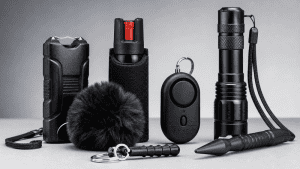
For some, a compact stun device offers a strong deterrent with minimal complexity. For others, a reliable pepper spray with a keychain clip fits naturally into daily habits. If you are on the road frequently, I put together a guide specifically for delivery drivers covering tools that work within the realities of that job. And if you are weighing spray options specifically, my breakdown of bear spray versus pepper spray for human threats clears up a common and important misunderstanding.
What legal responsibilities come with carrying a non-lethal weapon?
Every state has different regulations regarding stun guns, pepper spray, and other self-defense tools, and those laws can change. I always encourage my customers to check their state and local regulations directly before purchasing or carrying any device, and to understand that “non-lethal” does not exempt you from legal accountability for how and when you use it.
What I can tell you with confidence is this: responsible use starts with restraint. These tools exist to create distance and time to escape, not to escalate a situation. Understanding that mindset — and pairing it with real awareness of your surroundings — matters just as much as the tool itself. My post on how situational awareness helps you avoid threats before they escalate is one I recommend to every single customer, because the best outcome is always the one where you never need to use the tool at all.
How much power do I actually need from a stun gun?
You need enough to reliably interrupt an attacker’s motor function long enough for you to create distance — and that does not always mean the highest voltage on the shelf. I have watched the industry shift over the decades from bulky, intimidating devices to compact, genuinely effective options, and voltage is only part of that equation. Contact time, probe spacing, and confidence in handling the device under stress all matter just as much.
I wrote a complete explanation of how stun gun voltage works and how much power you actually need because this is one area where marketing numbers can create false confidence. A device you can operate calmly under pressure will always outperform one that intimidates you as much as it would an attacker.
How do I store and maintain a non-lethal weapon safely?
Keep it accessible, keep it charged or within its expiration date, and keep it away from children unless it is specifically designed with a child-safety mechanism. Pepper spray has a shelf life — typically two to four years — after which its propellant weakens and its effectiveness drops. Stun devices with rechargeable batteries need periodic charging even when not in use, since batteries degrade when left completely dead for extended periods.
I recommend a simple habit: check your device every time you change your clocks for daylight saving time. Twice a year, test the alarm function, check the charge, glance at the expiration date. This small ritual has kept thousands of my customers’ tools ready exactly when they needed them.
Frequently Asked Questions About Carrying Non-Lethal Self-Defense Tools
Is pepper spray considered a non-lethal weapon?
Yes. Pepper spray is classified as a non-lethal, or “less-lethal,” self-defense tool. It causes intense but temporary irritation to the eyes, skin, and respiratory system, allowing you time to escape a threatening situation. In rare cases involving underlying health conditions, reactions can be more severe, which is why understanding your own health considerations matters before you carry.
Can a stun gun kill someone?
Under normal, intended use on a healthy adult, stun guns are designed to incapacitate without causing death. However, individuals with certain heart conditions or pacemakers may face elevated risk. This is a rare exception rather than the rule, but it’s exactly why understanding the tool honestly matters more than assuming it is entirely without risk.
Do I need a permit to carry pepper spray or a stun gun?
Requirements vary significantly by state and even by city. Some areas have no restrictions, while others require permits, impose age limits, or restrict certain device types entirely. Always verify your local and state laws directly before purchasing or carrying any self-defense tool, since regulations can change.
What’s the difference between less-lethal and non-lethal?
The terms are often used interchangeably, but “less-lethal” more precisely acknowledges that any force tool carries some risk, however small. Both terms describe products designed to stop a threat without intending to cause death, distinguishing them clearly from firearms while still respecting that they are genuine force tools.
How often should I practice with my self-defense tool?
I recommend hands-on familiarity at least twice a year, ideally using an inert practice unit if your device offers one. Muscle memory matters under stress. Even a few minutes of practicing your draw, grip, and activation motion dramatically improves your ability to respond effectively in an actual emergency.
Are non-lethal weapons effective against multiple attackers?
They can create the opportunity to escape, but no non-lethal tool guarantees control over multiple threats simultaneously. Awareness and avoidance remain your strongest defense in that scenario. Pairing a reliable tool with strong situational awareness gives you the best possible chance of avoiding escalation altogether.
What should I look for when buying my first self-defense tool?
Look for something you will actually carry consistently, that you feel comfortable operating under stress, and that fits your daily routine — your commute, your bag, your habits. The most effective tool is the one that’s in your hand when you need it, not the most powerful one sitting in a drawer at home.
Carrying with Confidence, Not Assumption
Here is what I want you to walk away with: non-lethal does not mean risk-free, and it certainly does not mean ineffective. It means responsible power in your hands — power that deserves your understanding, your practice, and your respect. When you carry with that mindset, you are not just carrying a device. You are carrying genuine preparedness.
I have built my life’s work around helping families feel that quiet confidence — the kind that comes from knowing you made an informed choice, not a hopeful guess. If you have questions about which tool fits your life, I am always here to guide you through it, one honest conversation at a time.
Don’t wait until it’s too late. Equip yourself and your Loved Ones with reliable, Self Defense Tools and take control of your personal safety. All the products listed make great, low-cost gifts. Keeping you and your loved ones safe.
Free shipping on orders over $25.
Be Prepared and Be Safe!